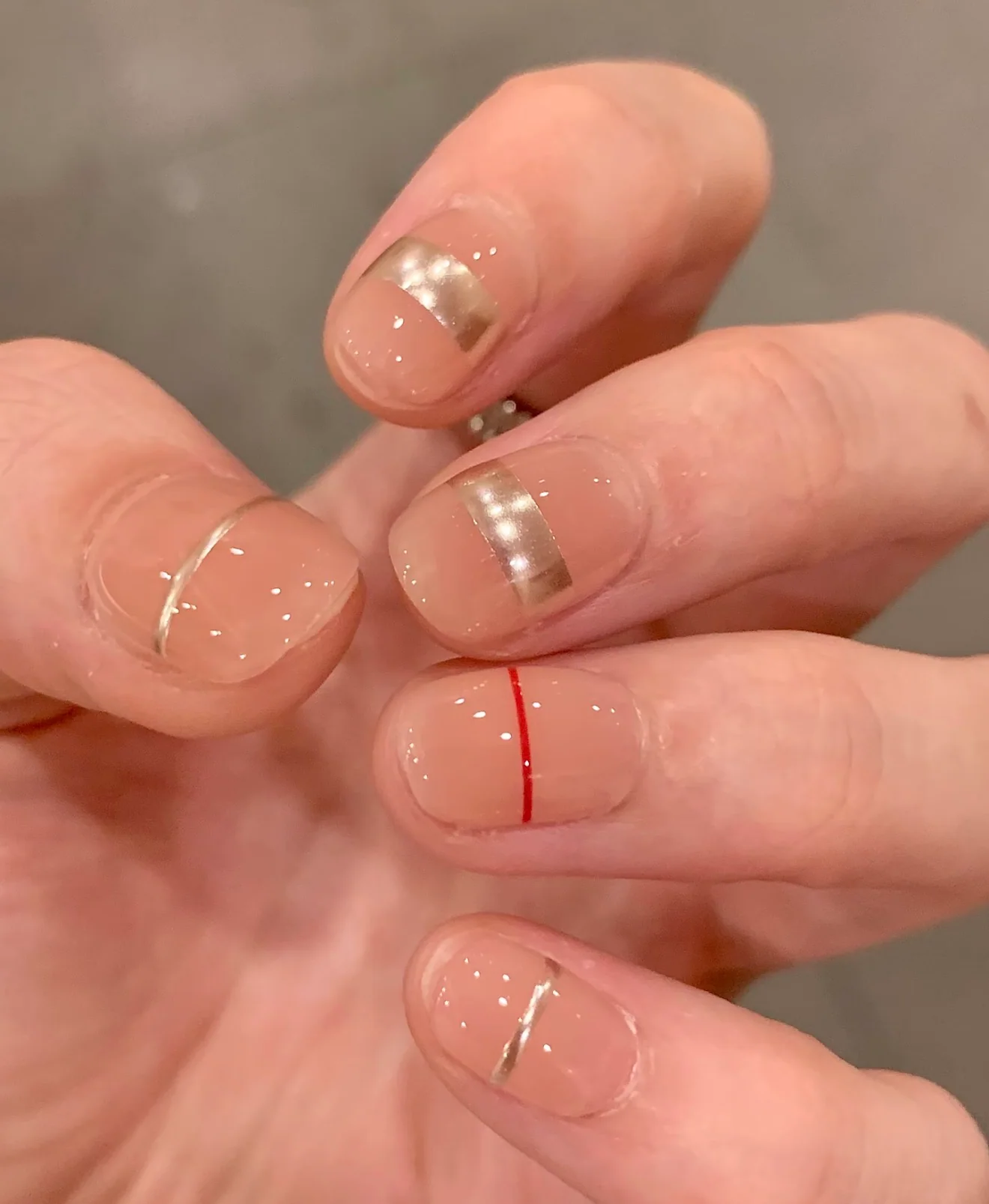
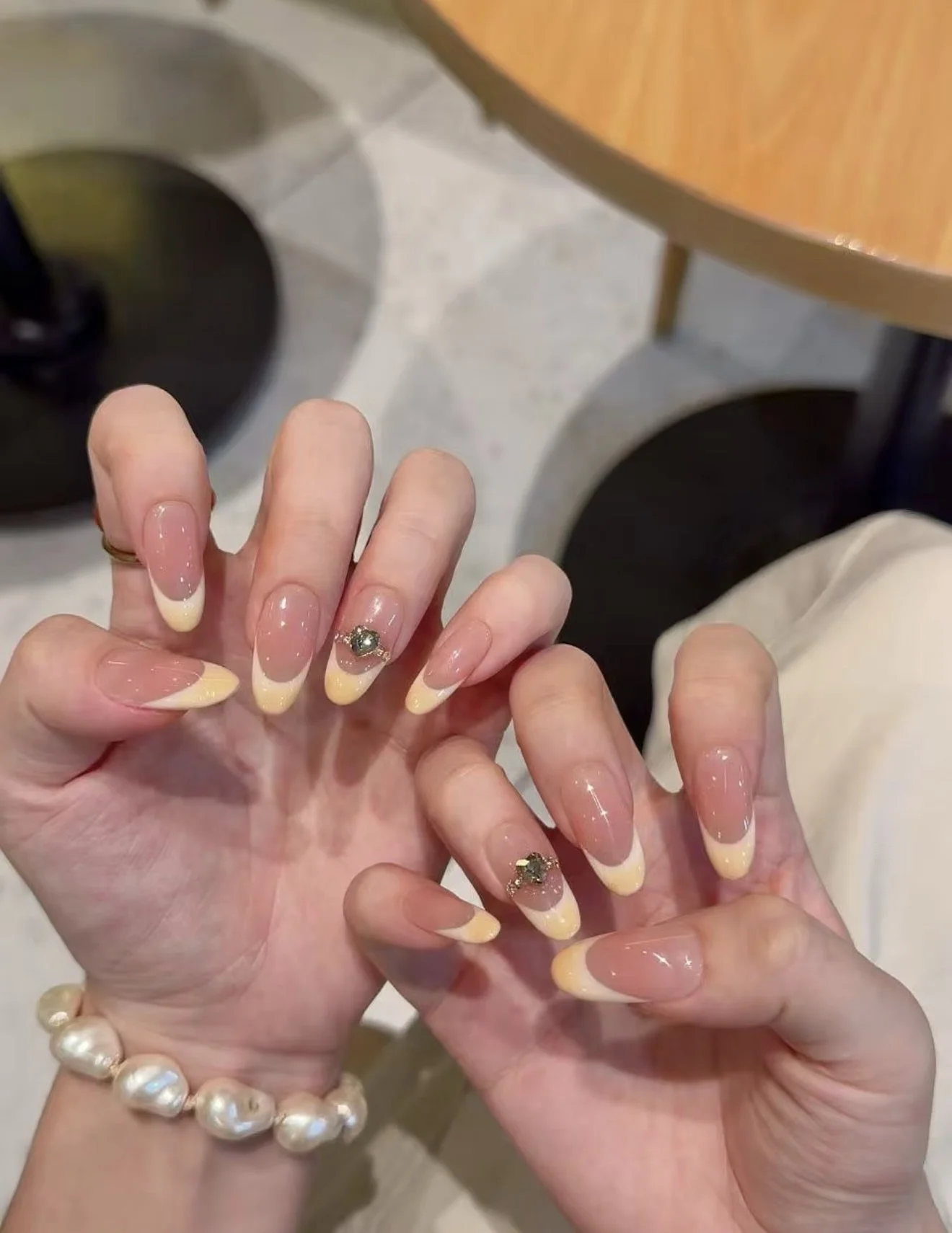
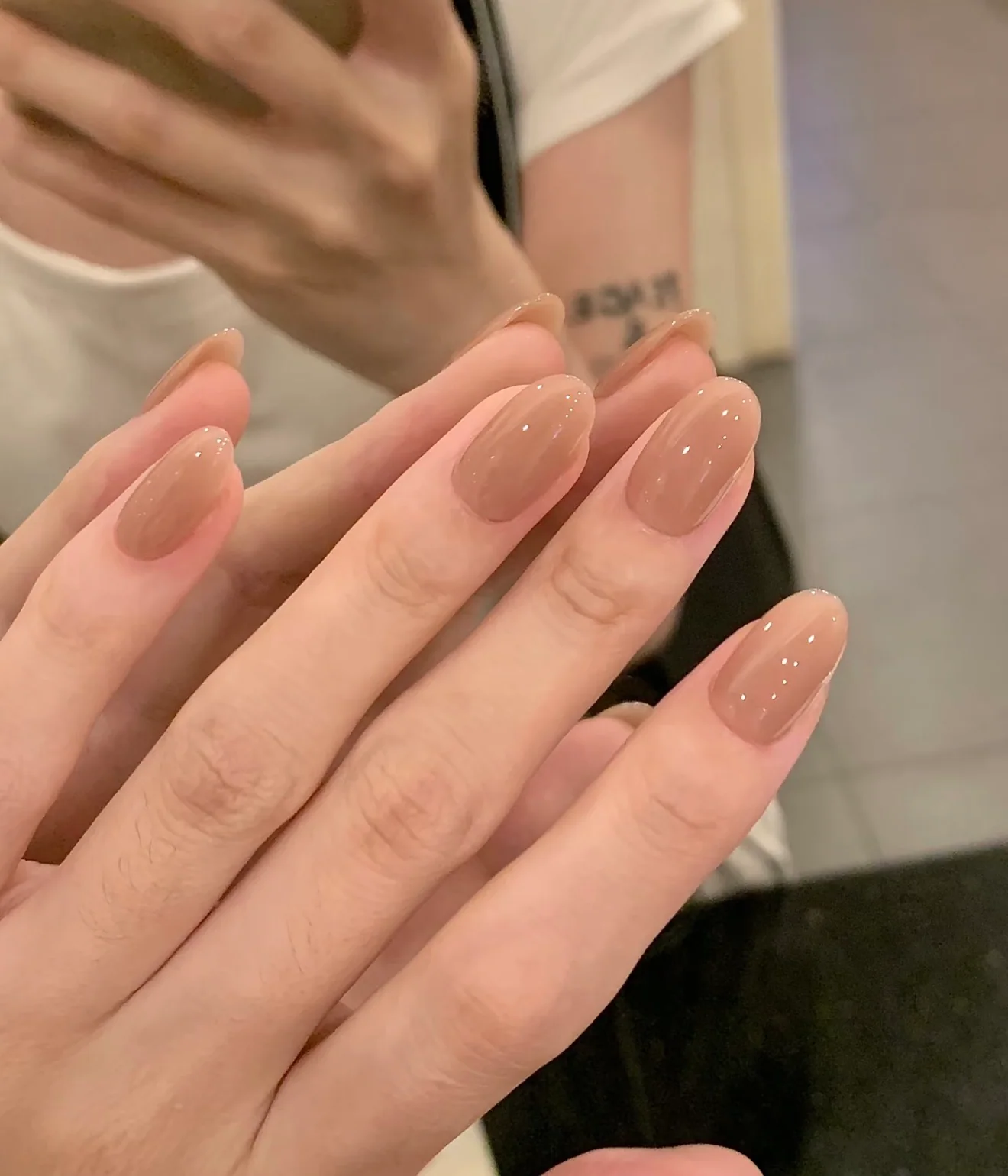
For shorter fingers, oval or almond nails can create a lengthened visual impression, while a shorter square or round outline can look neat and balanced. Longer fingers can carry either tapered or straighter shapes; there is no required shape for a particular hand. Choose by comparing the actual outline, manageable length and nail-bed fit rather than treating finger length as a rule.
Key takeaways
- Nail shape changes visual proportions but does not change the physical length of your fingers.
- Oval and almond silhouettes can suggest length through their rounded or tapered tips.
- Shorter fingers can wear square nails, and longer fingers can wear almond nails.
- Press-on size depends on measured nail width, not on whether your fingers look short or long.
Separate shape, length and size
These three choices answer different questions. Shape describes the outline, such as oval, almond or square. Length describes how far the nail extends beyond the fingertip. Size describes the width needed to fit the natural nail. A photo that appeals to you usually combines all three, so copying only its shape name may not reproduce the same proportions.
Start by asking what you like about the photograph. Is it the narrow tip, a softly rounded edge, the modest extension or the colour placement? Naming those details helps you choose a real product instead of searching for a single flattering label. The same outline at two lengths can look quite different.
Styling shorter fingers
If you want an elongated impression, compare oval and almond outlines at a comfortable length. Their curved or tapered ends draw attention along the nail rather than across a broad flat edge. Treat this as one styling direction, not a promise: tip width, decoration and the overall length still influence the result.
You may prefer a short square, especially if you like a clear graphic edge. That choice is not wrong for a shorter hand. A modest extension can feel more natural for everyday tasks than a much longer tapered set. Compare actual photographs and measurements rather than assuming longer always looks more balanced.
Styling longer fingers
Straighter shapes can offer a structured look, while oval and almond can continue a softer, elongated line. Either approach is available to longer fingers. Choose according to the manicure you want, not because a guide says you must visually shorten your hand. There is no need to correct a natural proportion you enjoy.
Look at how the shape sits beside your rings, sleeves and usual accessories. A flat tip may echo a geometric ring; a rounded tip may provide contrast. These are optional visual choices rather than fixed matching rules. A quieter set is useful when you want to judge the silhouette without elaborate decoration competing for attention.
Use design to explore proportions
Explore Fine Line for a restrained styling direction, Crème French for a tip-focused look, or Cashmere Glass for a softer option. Check the shapes actually available on each product page. These suggestions do not mean every design is offered in every shape or fits every hand.
Compare designs at a similar length where possible. Otherwise you may be reacting to the amount of extension rather than to the shape. A tip-led design also highlights the free edge differently from an all-over finish. Make a shortlist of complete combinations you would enjoy wearing instead of ranking outlines in isolation.
Let everyday tasks set a useful length
Think about typing, handling contact lenses, fastening jewellery, cooking and other regular tasks. A style that looks appealing in a close-up can feel less familiar in use. If you are new to press-ons, a manageable extension gives you space to learn how the tips feel without changing too many habits at once.
During a dry-fit, rest an unbonded tip on the intended finger and assess its extension. Do not use adhesive until you have checked all ten nails. You can choose a different silhouette for another occasion, but changing shape does not remove the need to confirm a comfortable length each time.
Measure the nail bed independently
Measure each bare natural nail at its widest point in millimetres using the site's guidance, and record both hands separately. WHATNAIL offers XS, S, M and L sizing. Do not infer a size from your height, hand size or finger length: two similar-looking hands can have different nail widths.
Check the curve as well as the width when the set arrives. A tip should sit comfortably without squeezing skin, rocking or requiring force to flatten it. Do not compensate for a poor match with extra adhesive. Use the measurement guide and ask for advice when your measurements do not align with a preset combination.
Keep the handmade outline intact
Do not substantially reshape a finished handmade set to make it match a photograph. Filing can disturb sealed edges or remove decoration. Choose the intended silhouette before ordering and ask the maker about any proposed adjustment. A tutorial for a blank plastic tip is not automatically appropriate for finished nail art.
WHATNAIL sets are handmade to order and designed for reuse. Dispatch is within 10 business days, with delivery time separate, so leave time to check measurements before an event. The most useful choice is a shape you enjoy, a length you can manage and a fit you have measured, rather than a universal claim about the best shape for your fingers.