The way to make press-on nails look like a salon manicure is to fit each nail to its exact width, prep the cuticle area so the press-on sits flush against the nail, and choose a handmade set with dimensional detail rather than a flat factory finish. Most of what reads as "salon quality" is not the nail itself — it is the invisible edge at the cuticle, the absence of gaps, and a finish that has depth.
Key takeaways
- Press-on nails look salon-made when each piece covers the natural nail plate edge to edge with no pressure on the surrounding skin; WHATNAIL sets come in four sizes, XS, S, M and L, to fit most nail widths.
- Cuticle prep — gently pushing back the cuticle and lightly buffing away shine — is what lets a press-on edge sit flush instead of hovering above the nail.
- Nail glue generally gives a flatter, longer-lasting bond than adhesive tabs, which is the closer match to a salon-applied look.
- Handmade sets with layered detail — hand-painted lines, gradients, dimensional gel — read as salon work because they avoid the flat, uniform look of mass-produced nails.
- WHATNAIL nails are handmade to order, reusable, and ship to the US, Canada and 15 European destinations; shipping is $5.99 for a single set and free when you order two or more.
Fit is what gives press-ons away
The single biggest difference between nails that look applied at home and nails that look like salon work is fit. A press-on that is even slightly too narrow leaves a visible strip of natural nail at each side; one that is slightly too wide overlaps the skin and makes the whole nail look chunky. A salon technician chooses tip sizes by eye and files where needed — you can get the same result by measuring each nail in millimetres and dry-fitting every piece before any adhesive touches your nail.
Dry-fit the full set in order, left hand then right hand, and look at each nail straight on and from the side. The edge of the press-on should sit just inside your natural nail's sidewalls with no rocking. If a nail sits between two sizes, go with the larger one and gently file the sidewall edges until it drops in place — filing away a fraction of a millimetre is invisible; a too-small nail that pinches the skin is not.
Prep like a nail tech
In a salon, the manicure happens before the colour. The same order applies at home: the press-on can only sit as well as the nail underneath it.
Push, don't cut
Gently push the cuticle back with a soft cuticle pusher after washing your hands in warm water. Clear only loose cuticle material from the nail plate without cutting or scraping living skin: a press-on placed over that film lifts within days and leaves a visible gap. Skip cutting tools — pushed cuticles are enough, and they keep the skin around the nail smooth rather than ragged.
Dehydrate and prime
Lightly buff the whole nail plate with a fine-grit buffer — just enough to remove shine, never to thin the nail — then wipe each nail with an alcohol pad and let it air-dry. Oils and moisture are the reason press-ons lift at the cuticle, and this two-minute step is exactly what makes a salon application bond flat and stay flat. Apply the press-on to each finger within a few minutes of this step, while the nail surface is still dry.
Glue for the salon look, tabs for convenience
Adhesive tabs are excellent for short wear and easy removal, but they add a thin layer between the nail and the press-on, which can create a slightly raised profile. If the goal is the flattest, most salon-like bond, nail glue is the closer match: it fills the micro-gap between the two surfaces and holds the press-on edge nearly flush with the nail plate.
Apply a thin, even layer of glue to the natural nail (a second thin layer on the press-on for maximum wear), then press and hold each nail firmly for about 30 seconds, pushing slightly toward the cuticle so the edge seats first. Start with the dominant hand's nails after they are positioned — working from the thumbs last on each hand keeps the big nails from shifting while you line up the smaller ones.
Choose sets that already look like salon work
Not all press-on sets are equal candidates for the salon illusion. The designs that pass for salon work share a few traits:
- Depth, not flatness. Salon manicures almost always have some dimensional quality — a jelly layer over pigment, a hand-painted detail, a gradient that shifts in the light. A flat, opaque, uniformly coloured factory set is the one most likely to read as "press-on".
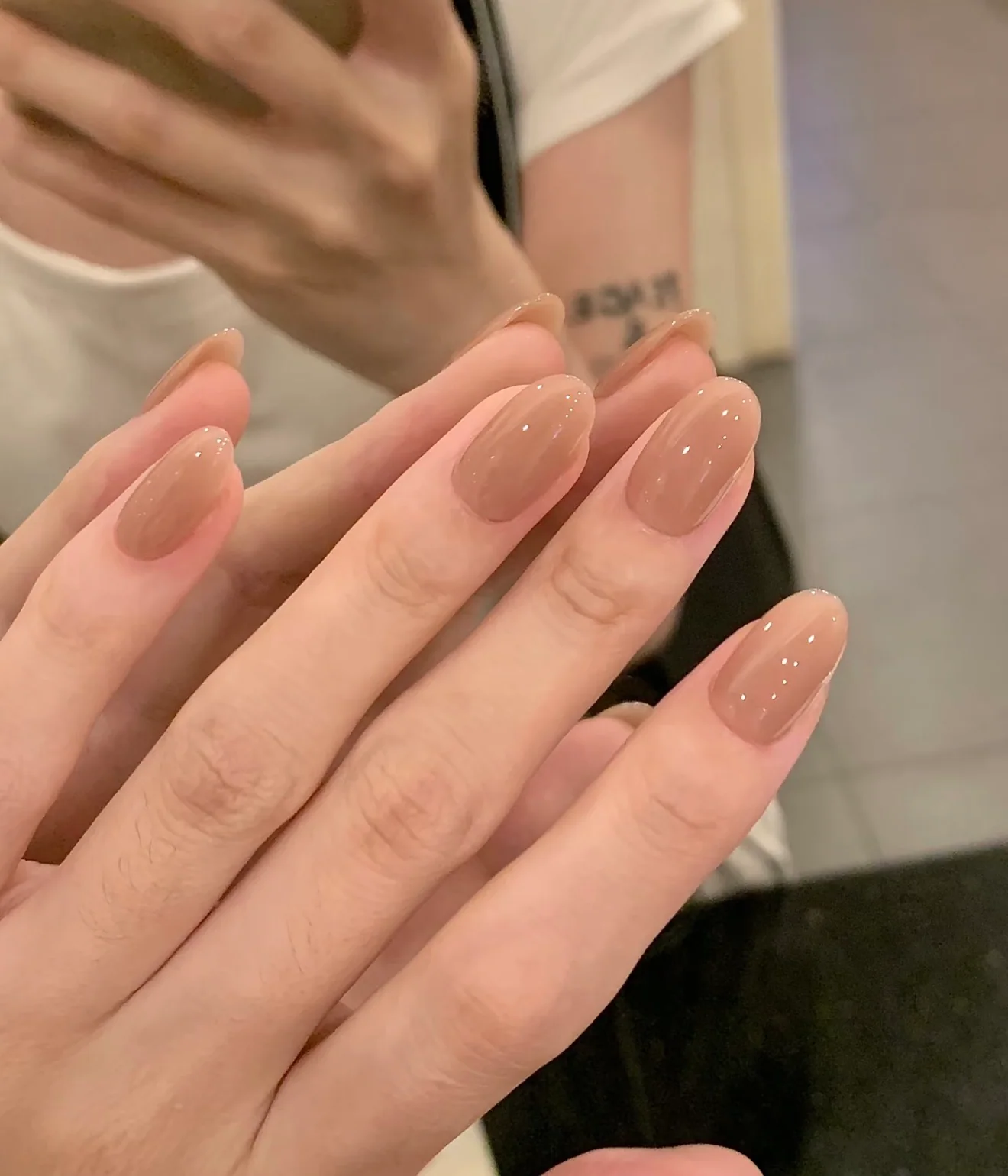
- Sheer or neutral bases. Sheer nude and blush bases blend with your natural nail at the cuticle line, so any hairline gap is camouflaged instead of outlined. Cashmere Glass is built exactly on this principle — a sheer glassy nude that disappears at the edge.
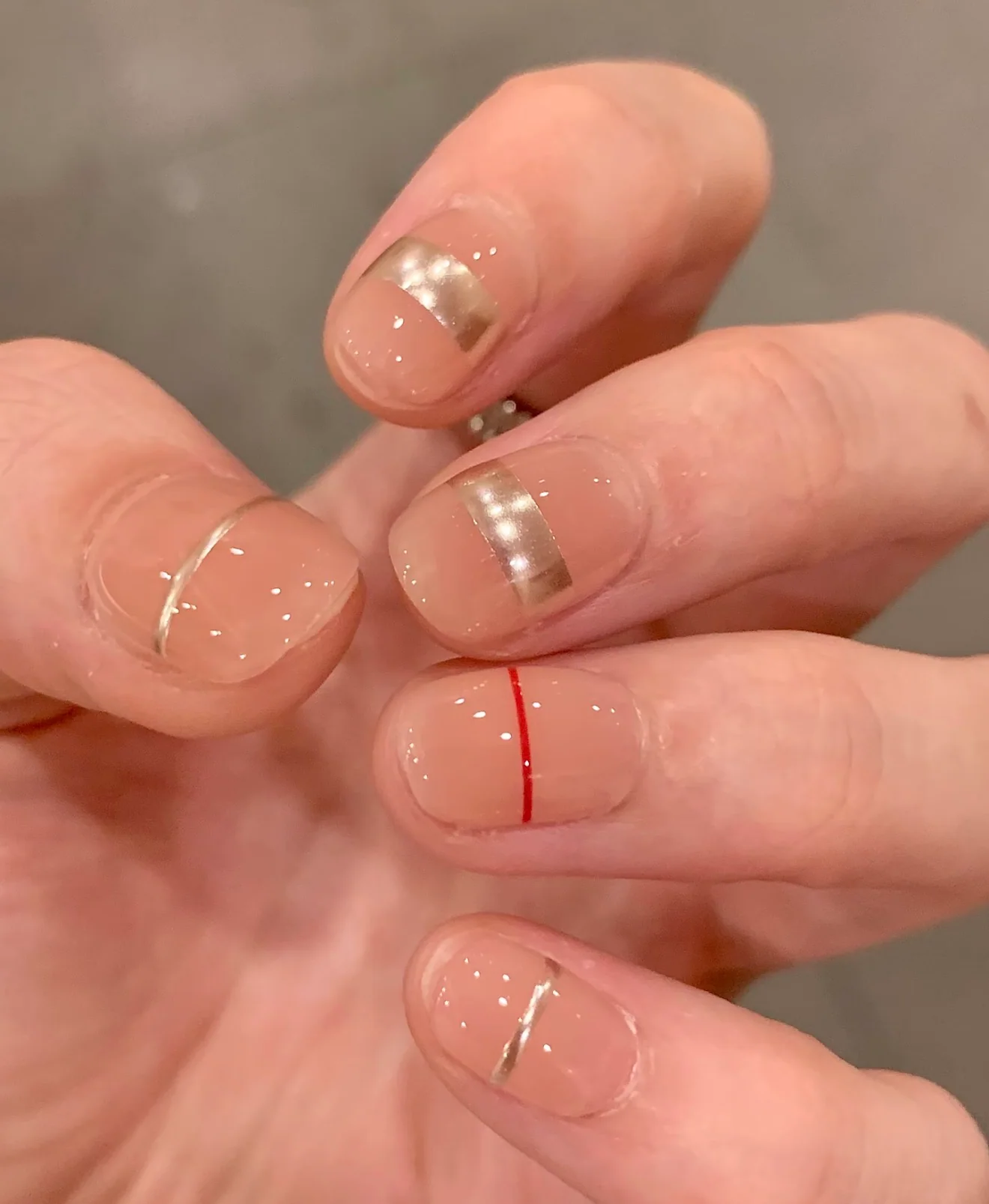
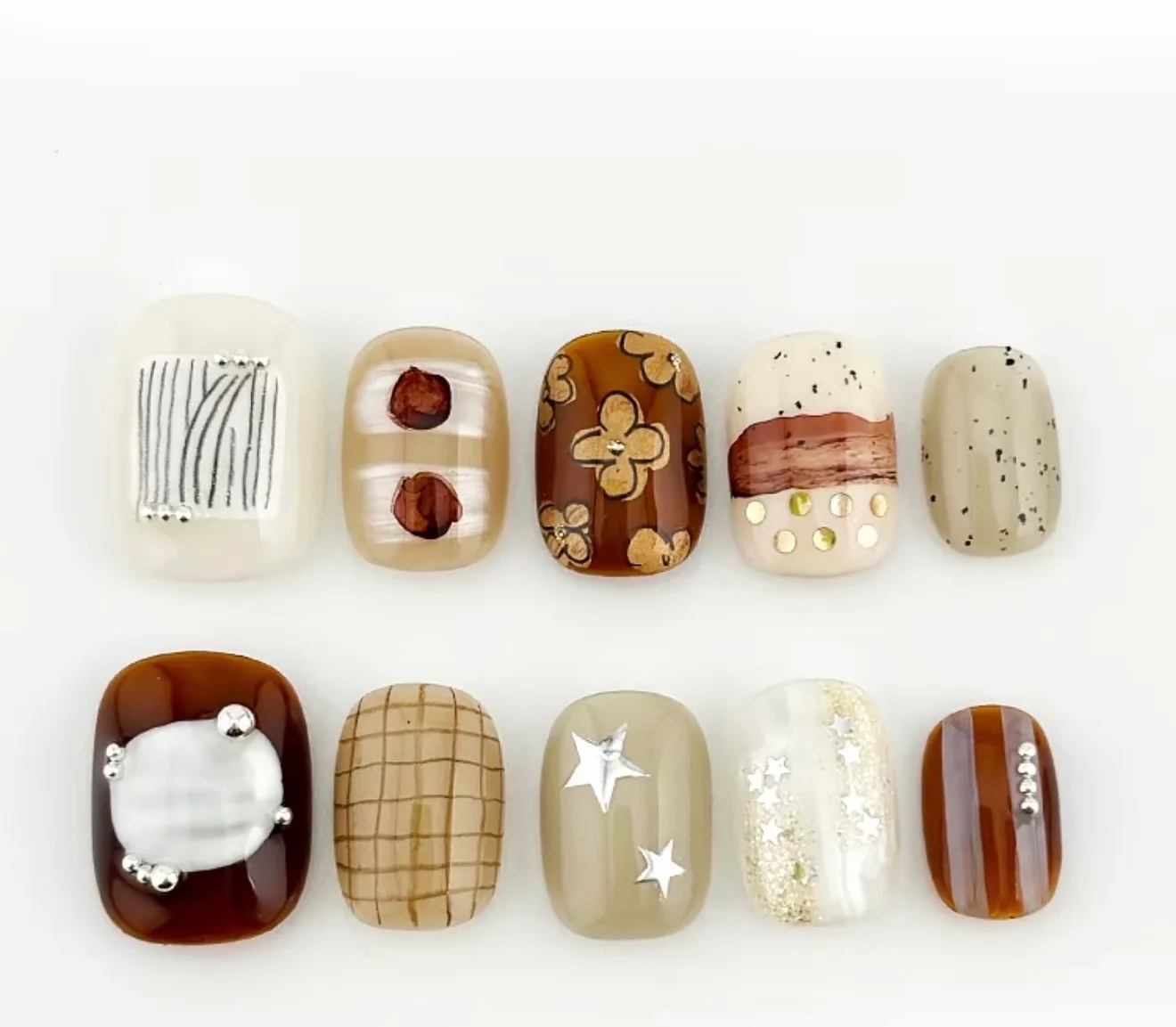
- Hand-finished detail. Fine line work, hand-placed crystals and painted gradients vary slightly from nail to nail, which is precisely how a salon set looks up close. Fine Line's hand-painted linear art and Porcelain Cabinet's layered finish are good examples of detail that machines do not reproduce.
- A considered shape. Short almond and short oval read as elegant salon choices because they follow the finger; overly long or exaggerated shapes are harder to mistake for a salon manicure on most hands.
Protect the handmade finish
Avoid reshaping finished nails: filing can break the sealed edge or damage layered artwork. Choose the shape you want when ordering and ask WHATNAIL before making adjustments.
Aftercare that keeps the illusion
A salon manicure looks the part partly because it is freshly maintained, so keep the home set the same way. Avoid soaking the nails in hot water for long stretches in the first 24 hours — the 24-hour rule applies just as much here. Wear gloves for harsh cleaning chemicals, and if one corner starts to lift, remove the loose nail following the adhesive instructions, clean and dry both surfaces, then reapply rather than trapping moisture beneath it.
Oils can help or hurt: cuticle oil keeps the skin around the nail looking polished, but flooding the nail plate with oil before application weakens the bond. Apply cuticle oil daily after the set is on and fully cured, keeping it on the skin and away from the seams.
What "salon quality" means at WHATNAIL
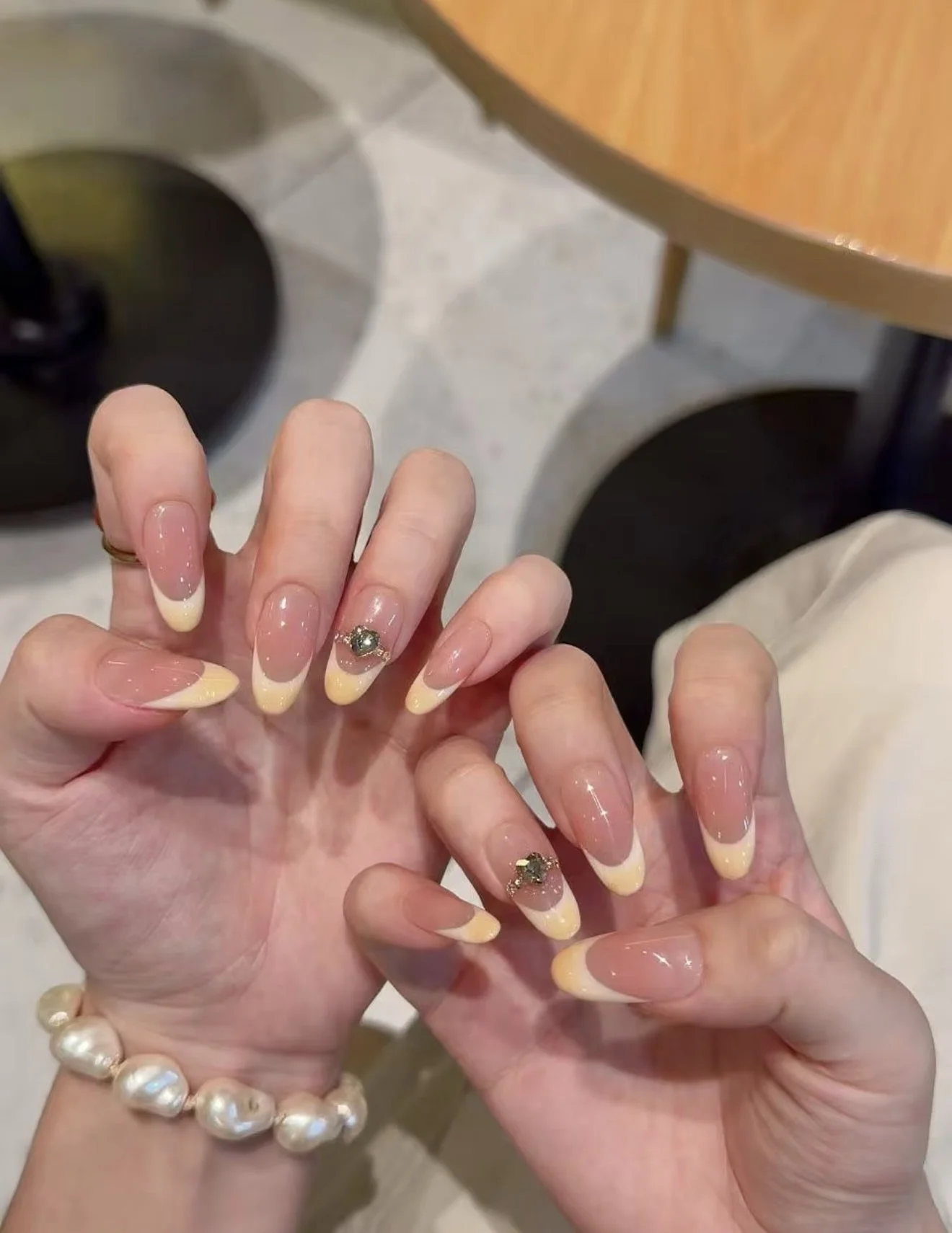
WHATNAIL sets are handmade press-on nails, made to order and reusable across multiple wears. Every set is painted by hand, which is why the detail has the variation and depth that salon work is known for — and why each order is made specifically for you, which also means returns, exchanges and refunds are not available for hygiene and made-to-order reasons. Cancellations are reviewed case by case; orders already in production cannot be refunded. Sets come in XS–L and ship to the US, Canada, the UK, Ireland and 13 countries across continental Europe (DE, FR, IT, ES, PT, NL, BE, AT, CH, SE, NO, DK, FI). Shipping is $5.99 for a single set and free when you order two or more — which is also the practical way to build a small rotation, like the Crème French for weekdays and something with more sparkle for the weekend.
The honest version: press-ons will never be a salon manicure. But with a fitted size, proper cuticle prep, glue instead of tabs, and a handmade set with real depth, the result can look polished and carefully fitted.
Wear time varies with preparation, adhesive and daily activity; quoted ranges are not guarantees. Always follow the adhesive maker’s application, curing and removal directions. Warm soapy water may help release adhesive tabs, but it is not a universal remover for nail glue or cured gel. Do not force a nail that resists removal, glue over trapped moisture, or file through a handmade finish. WHATNAIL handmade sets dispatch within 10 business days; delivery time is additional and depends on destination.
Explore the designs
Crème French · Cashmere Glass · Fine Line · Porcelain Cabinet