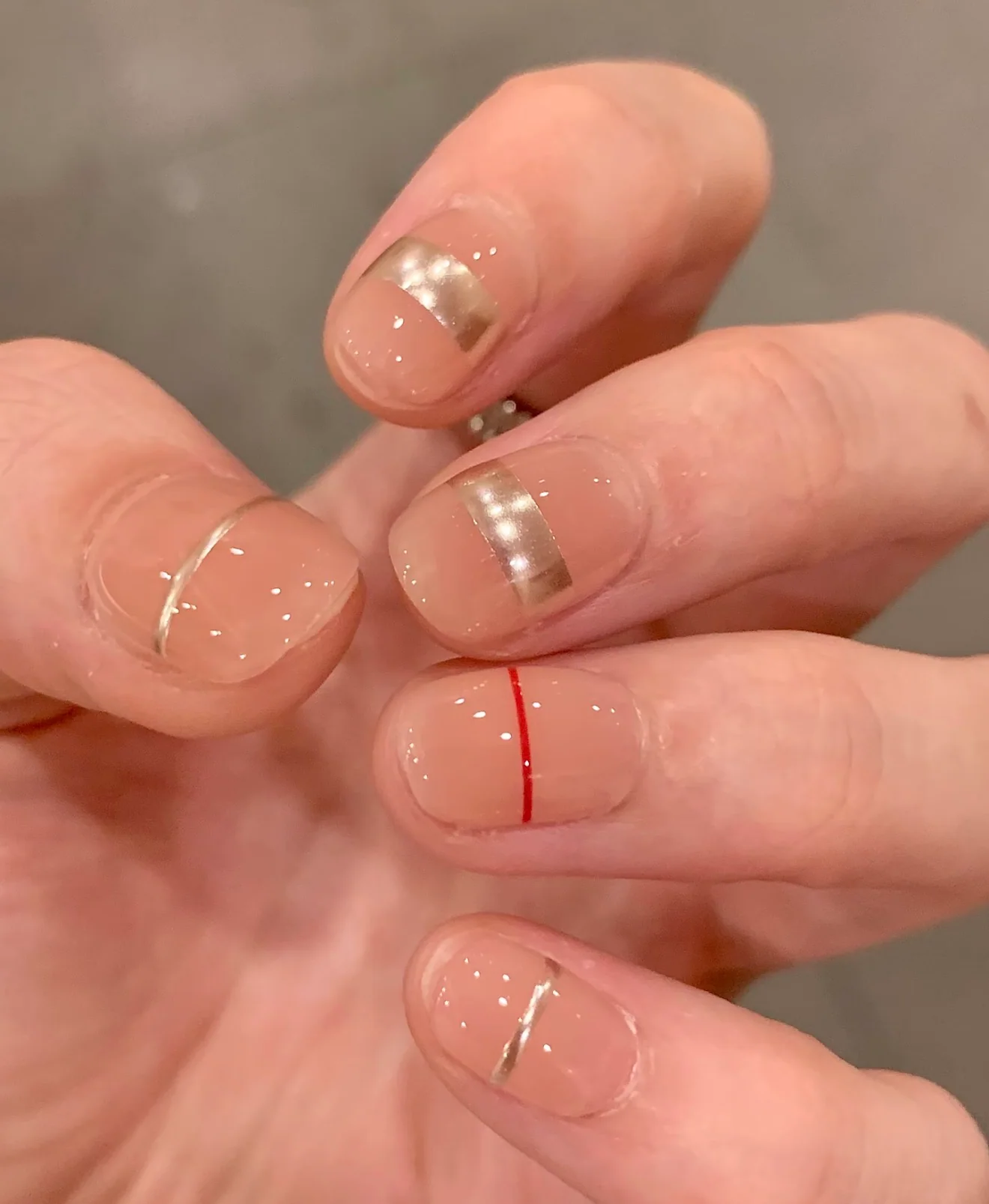
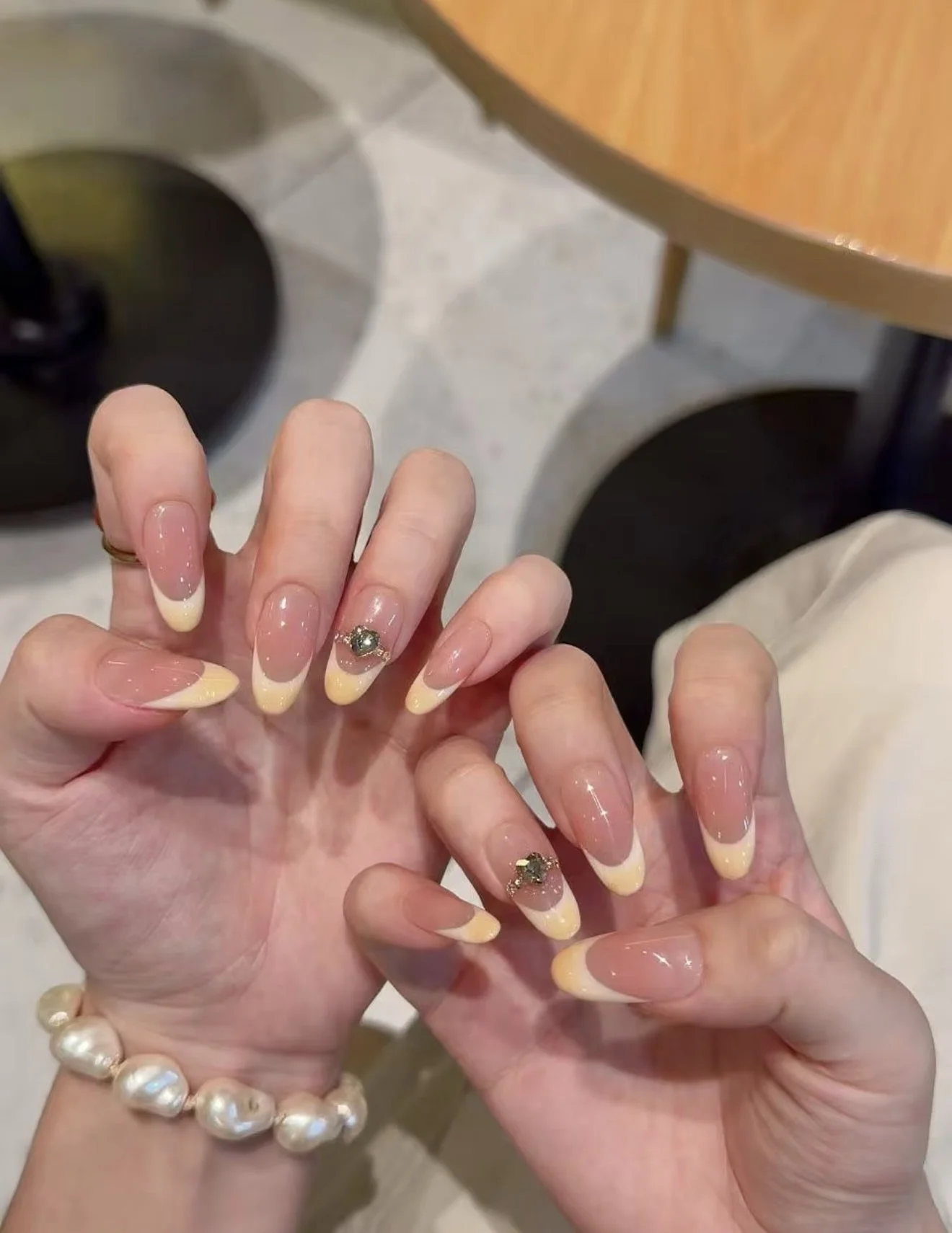
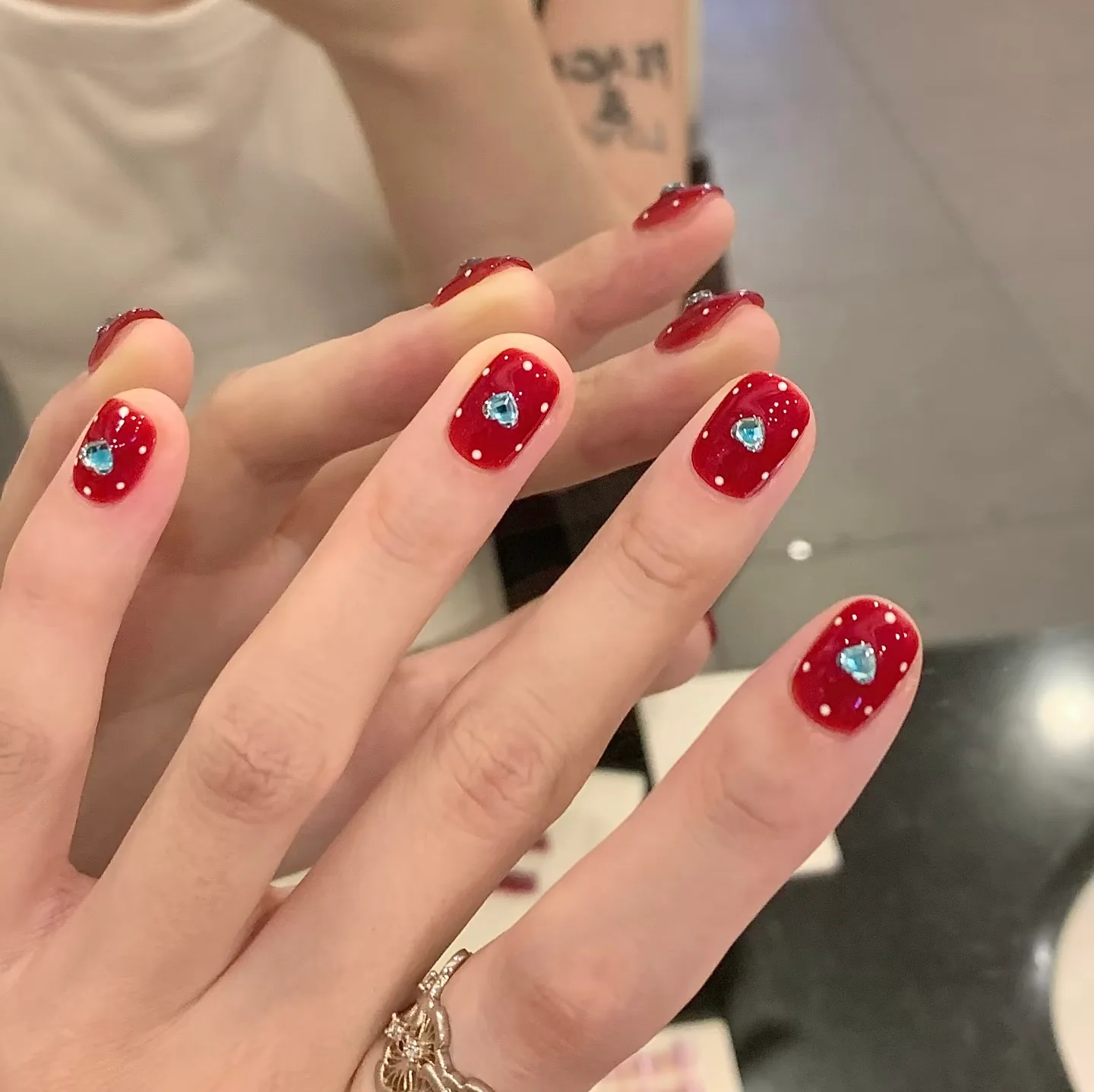
Coffin and ballerina nails both describe a tapered outline with a flat tip, and their names are often used interchangeably. Square nails have straighter sides and keep more width toward the free edge. Some makers distinguish coffin from ballerina by the softness of the sides, so photographs and measurements are more useful than a name alone.
Key takeaways
- Coffin and ballerina usually describe tapered sides ending in a flat free edge.
- Square nails keep a more consistent width from the nail bed toward the tip.
- Shape names do not specify nail length, width or the exact amount of taper.
- Choosing a press-on shape does not replace measuring each natural nail for the correct fit.
Start with the outline, not the label
Imagine looking straight down at a nail. Trace the sides from the base toward the tip, then look at the free edge. If the sides gradually narrow and the tip finishes flat, you are looking at the broad coffin or ballerina family. If the sides stay relatively straight and the tip remains wide, the outline reads as square.
There is no single naming convention across every artist and tip manufacturer. Peggy Sage's professional gel guide, for example, groups ballerina and coffin together. Treat a product photograph as the practical reference when a seller uses either name, and ask for clarification if the outline matters to your order.
Coffin: taper with a flat finish
A coffin outline narrows toward the end without finishing in an almond point. The flat tip gives it a graphic edge, while the taper reduces the visual width at the end. The effect is easier to see when there is enough length for the sides to narrow, but coffin is not automatically a very long nail.
When comparing two sets, look at how early the taper begins and how narrow the tip becomes. One may have an understated change in width; another may be distinctly angular. Both can be labelled coffin. Choose the proportion you like rather than expecting every set with that name to look identical.
Ballerina: a closely related silhouette
The ballerina name evokes the flat toe of a pointe shoe. In everyday shopping, it often refers to the same tapered, flat-ended silhouette as coffin. Where a maker separates the names, ballerina may describe a softer curve through the sides rather than a sharp angular taper. That distinction is useful only when the maker defines it.
You do not need to settle a naming debate to choose a manicure. Compare the base width, side curve and final tip width in the actual images. If you have a reference photograph, explain which features you want: a softer side curve, a broader flat tip or a shorter extension. Those details communicate more than the label alone.
Square: straighter sides and a broader tip
Square nails preserve more width through the length, finishing with a flat edge. Corners may look crisp or gently softened depending on the tip. A softer square is not necessarily labelled the same way by every seller, so inspect the corners as well as the front edge.
The broad tip can frame a French design or a linear composition. Explore Crème French for a classic styling direction and Fine Line for a restrained one. These are design suggestions: confirm the shapes actually offered on each product page before ordering rather than assuming a design comes in every silhouette.
Length changes the comparison
Compare shapes at similar lengths whenever possible. A long coffin nail and a short square nail differ in both outline and extension, which makes it hard to decide what you actually prefer. Look for the approximate length, not just words such as short or medium, because those descriptions can vary between sellers.
Think about the tasks you do with your hands. Try an unbonded tip against your finger and consider typing, fastening clothes and handling small items before applying the full set. A shape that looks appealing in a close-up can feel very different during a working day. Starting with a manageable length gives you a clearer comparison.
Fit comes before visual proportions
A tapered tip does not solve an unsuitable fit at the base. Measure the widest part of each bare natural nail and record both hands separately. WHATNAIL offers XS, S, M and L sizing. Compare all ten measurements with the chart and ask for guidance when your fingers do not match a preset combination.
During a dry-fit, check whether the press-on sits comfortably without squeezing skin, rocking or needing force to flatten it. The curve and width matter independently of the outline. Do not use extra adhesive to compensate for a poor match, and do not substantially file a finished handmade set into a different shape.
Match the silhouette to the design
A flat tip provides a clear border for colour and detail, whether the sides taper or stay straight. Embellished styling such as Ruby Cabochon can offer a different visual emphasis from a quiet French look. Use the real product images to judge the balance between decoration, tip width and length.
A useful shortlist contains two or three combinations you would actually wear, rather than a shape in isolation. You might prefer a tapered outline for an occasion and a shorter square for another outfit. Neither is a universal rule for a particular hand type; personal preference and comfortable fit are better guides than promises about what flatters everyone.
A simple ordering checklist
- Choose the silhouette by looking at the sides and flat tip.
- Confirm the available shape and approximate length on the product page.
- Measure each natural nail and compare all ten widths with the chart.
- Check the attachment and removal guidance for the finished set.
- Allow time for making and delivery before an event.
WHATNAIL sets are handmade to order and designed for reuse. Dispatch is within 10 business days, with delivery time separate. The goal is a shape you recognise in the photographs, a fit you have checked and a set you can enjoy without trying to change its finished outline after it arrives.